
Today, September 8th 2026, India’s defense minister arrives in Sri Lanka and it appears the number one item on the agenda is a Memorandum of Understanding (MOU) on defense.
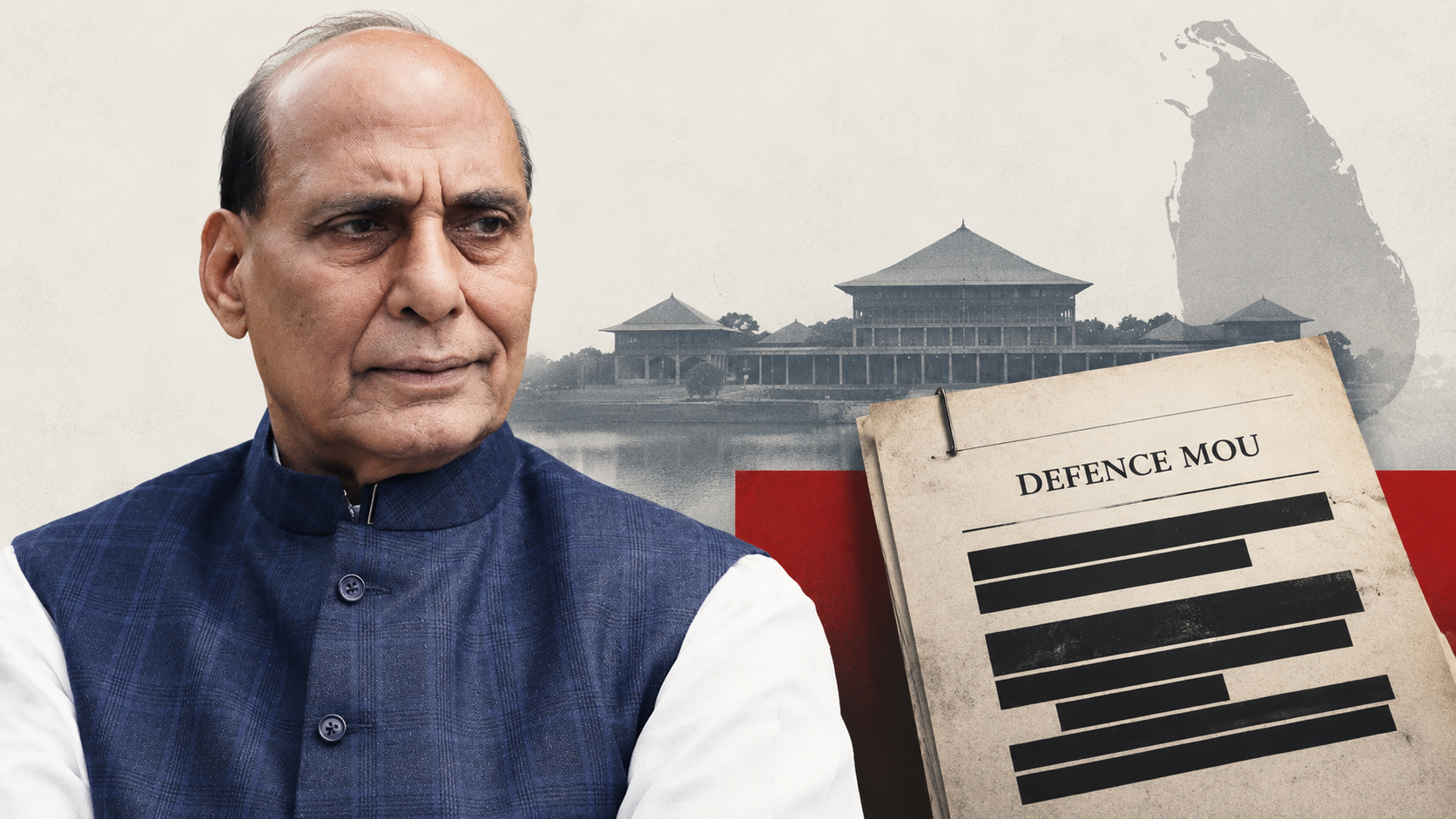
But almost no one outside a small circle—the president and the 5 politburo members of the JVP—seems to know what it contains. GoSL has previously stated that India has restricted unilateral disclosure of the agreement—including, apparently, to Parliament.
Shouldn’t that trouble Sri Lanka and Sri Lankans?
India calls itself the world’s largest democracy, and by scale it is. But the India of today is no liberal democracy and has developed its flavor, that one may call Indian democracy—one with a Hindu nationalistic taste. Therefore India may be comfortable with a degree of executive secrecy but Sri Lanka need not be.
A government in power—Political leadership—is only a temporary custodian of the state, one elected for five years. It should not be able to bind the country to a defense arrangement with potentially long-term strategic consequences while withholding its terms from the public or at minimum from their representatives, The Parliament.
Given that the NPP enjoys a commanding two third parliamentary majority, this secrecy is harder to justify because if the agreement is genuinely in Sri Lanka’s interest, scrutiny should pose little danger. A government with more than two-thirds of the legislature behind it can hardly claim that parliamentary consent is an impossible hurdle. If the argument against presenting it to the parliament was that politically motivated opposition to a “good” proposal, this composition does not validate it.
Our argument is not against closer defense ties with India. Geography makes such an argument void. Good sense may make such ties desirable.
The question is why the need for secrecy?unless there is conditions so damaging to the interest of the country, that their own members of parliament might oppose it.
Another argument is that defense provisions naturally are sensitive. But there is a different between operational details and the need for protecting classified information and concealing the provisions of a commitment being made in the country’s name. That distinction matters because in a democracy a government needs the consent of the governed to govern.
If the MOU strengthens Sri Lanka’s security without diminishing its sovereignty, parliamentary scrutiny should make it more legitimate, not less. If it cannot survive such scrutiny, especially in a parliament where the ruling party holds a commanding majority, that by itself is revealing.